

Quick answer
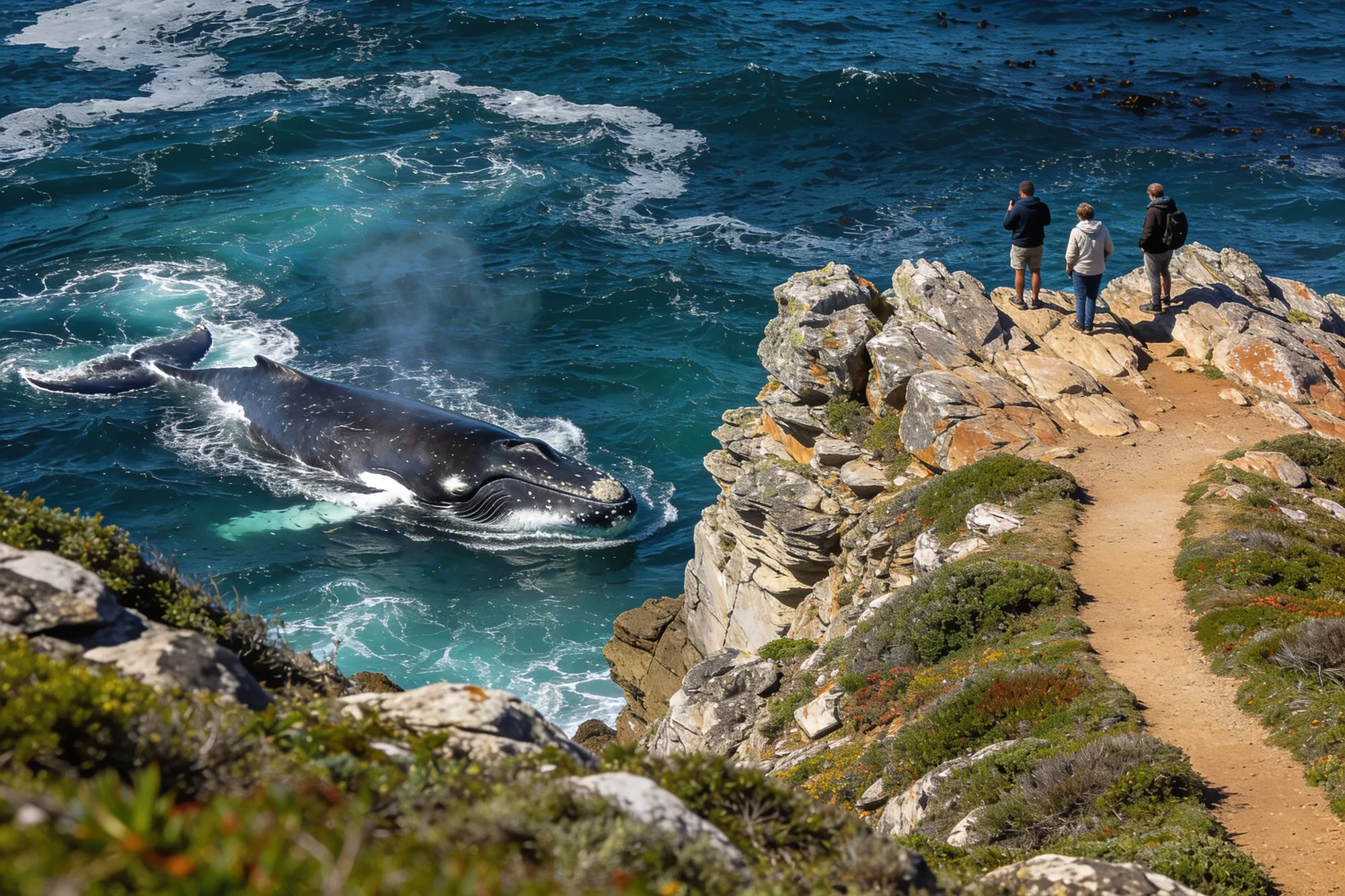
The cape town whale watching season in Hermanus spans June through November, with peak sightings occurring in September and October when cow-calf pairs occupy Walker Bay in the highest numbers. Southern right whales arrive to calve and nurse in the bay's protected waters, congregating close enough to shore that observers along the cliff path can watch breaching, tail-slapping, and nursing behavior without binoculars. Early mornings between 07:00 and 10:00 offer the calmest conditions and clearest visibility.
Walker Bay hosts one of the largest seasonal concentrations of southern right whales in the Southern Hemisphere. Between 80 and 120 individuals occupy the bay each year during the cape town whale watching season, drawn by water temperatures between 12°C and 16°C and the absence of predatory pressure. The migration follows a predictable annual rhythm. Pregnant females arrive first in late May and early June, selecting shallow, sheltered nursery areas along the rocky coastline. Bulls and juveniles follow through July and August. By September, cow-calf pairs dominate the population, and mothers use the bay's natural amphitheater to teach newborns essential behaviors—spy-hopping, breaching, and fluking—in water shallow enough for human observers to document every motion. October sustains the highest density, with multiple whales visible simultaneously from fixed vantage points along the eight-kilometer Cliff Path. The departure window opens in late October as calves gain sufficient blubber reserves for the return journey to Antarctic feeding grounds. By mid-November, most individuals have left Walker Bay, though stragglers occasionally linger into early December. The Hermanus coastline remains accessible year-round, but sightings outside the June-to-November corridor are exceptional rather than routine. Whale watching in Hermanus centers on the public cliff path system, a contiguous stone walkway connecting Gearing's Point to Grotto Beach. No entrance fee applies to land-based observation, and the terrain allows wheelchair access along most sections. The town employs a whale crier—the only such position globally—who patrols the path during peak season and sounds a kelp horn to signal active sightings, directing visitors to current congregation points.
“Walker Bay hosts between 80 and 120 southern right whales each season, with cow-calf pairs occupying the shallow nursery areas through October.”
Understanding the Cape Town Whale Watching Season: When to Visit
The primary whale watching season in Hermanus spans from June to November, with September and October typically offering the highest frequency of Southern Right whale sightings. Planning your visit for the early morning window of 07:00–10:00 provides the calmest water conditions for observing these marine mammals from the cliff paths.
June to August
Low to moderateCooler temperatures averaging 15°C to 18°C
Whales begin arriving in the bay to mate and calve. Early sightings are frequent during these months.
September to October
HighMild temperatures averaging 18°C to 20°C
This period marks the peak of the season. Sightings are consistent throughout the day.
November
ModerateWarmer temperatures averaging 20°C to 23°C
Whales start their migration back to the Southern Ocean. Sightings are less frequent than in peak months.
Weekday mornings
Low—
Calm morning waters and cooler temperatures provide optimal whale spotting conditions.
Verdict: For the highest probability of sightings and quieter cliff paths, plan your visit during the morning hours of 07:00–10:00 throughout September or October.
Daily Access During Cape Town Whale Watching Season
The public cliff paths in Hermanus are accessible at all times, allowing visitors to walk the coastline throughout the day and night. These paths remain open daily for those observing the coast.
| Monday | 00:00–23:59 | |
|---|---|---|
| Tuesday | 00:00–23:59 | |
| Wednesday | 00:00–23:59 | |
| Thursday | 00:00–23:59 | |
| Friday | 00:00–23:59 | |
| Saturday | 00:00–23:59 | |
| Sunday | 00:00–23:59 |
Arriving for Your Cape Town Whale Watching Season Visit
The Cliff Path is located in central Hermanus, approximately 120 kilometers from Cape Town. The most direct approach is via the R43 road.
N2 highway to R43 towards Hermanus
Intercape or similar coach to Hermanus Station
Private transfer from Cape Town International Airport
Hermanus Events During the Cape Town Whale Watching Season
Hermanus hosts several community events that coincide with the arrival of southern right whales, offering a deeper connection to the local marine environment. These gatherings celebrate the migration and provide cultural context to the natural phenomenon.
Whale Season Opening
The official commencement of the season signals the start of land-based spotting and increased focus on marine conservation. Booking accommodation in advance is recommended as visitor interest rises during this month.
Hermanus Whale Festival
This annual event features live music, markets, and marine educational displays to celebrate the peak whale population. Expect higher visitor numbers and increased demand for services throughout the town during the festival days.
Marine Month
As the season begins to taper, this period emphasizes ocean awareness and ongoing sightings. It serves as a quieter time to visit while local environmental programming remains active.
Check availability
Frequently Asked Questions About Cape Town Whale Watching Season
Everything you need to know about cape town whale watching season