7 hr
Hermanus Whale Watching Adventure from Cape Town
- Expert local guide
- Small group
- Skip-the-line access
- Free cancellation
Cape Town to Hermanus Whale Watching Tour — Coastal Transit & Marine Encounters
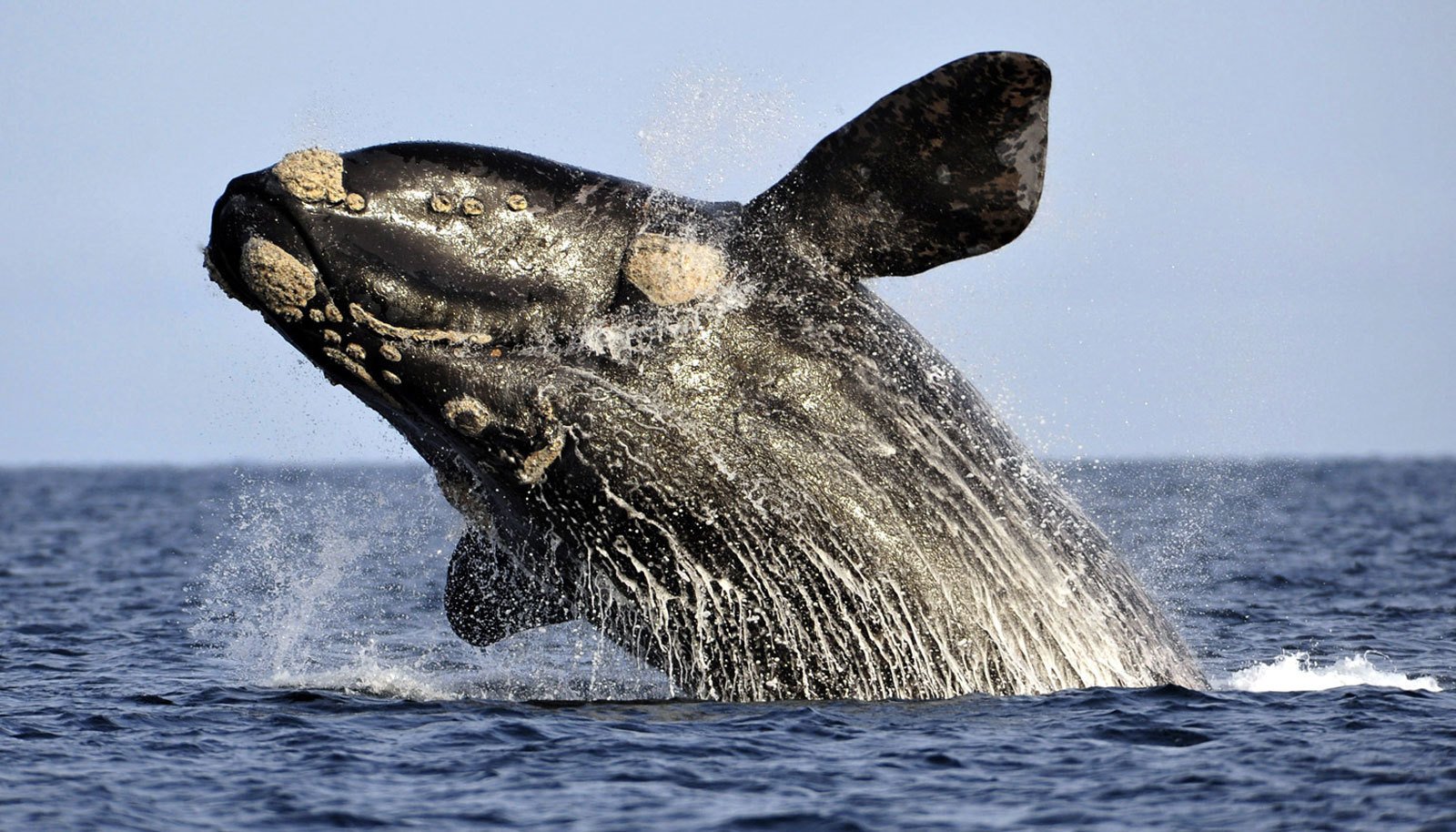
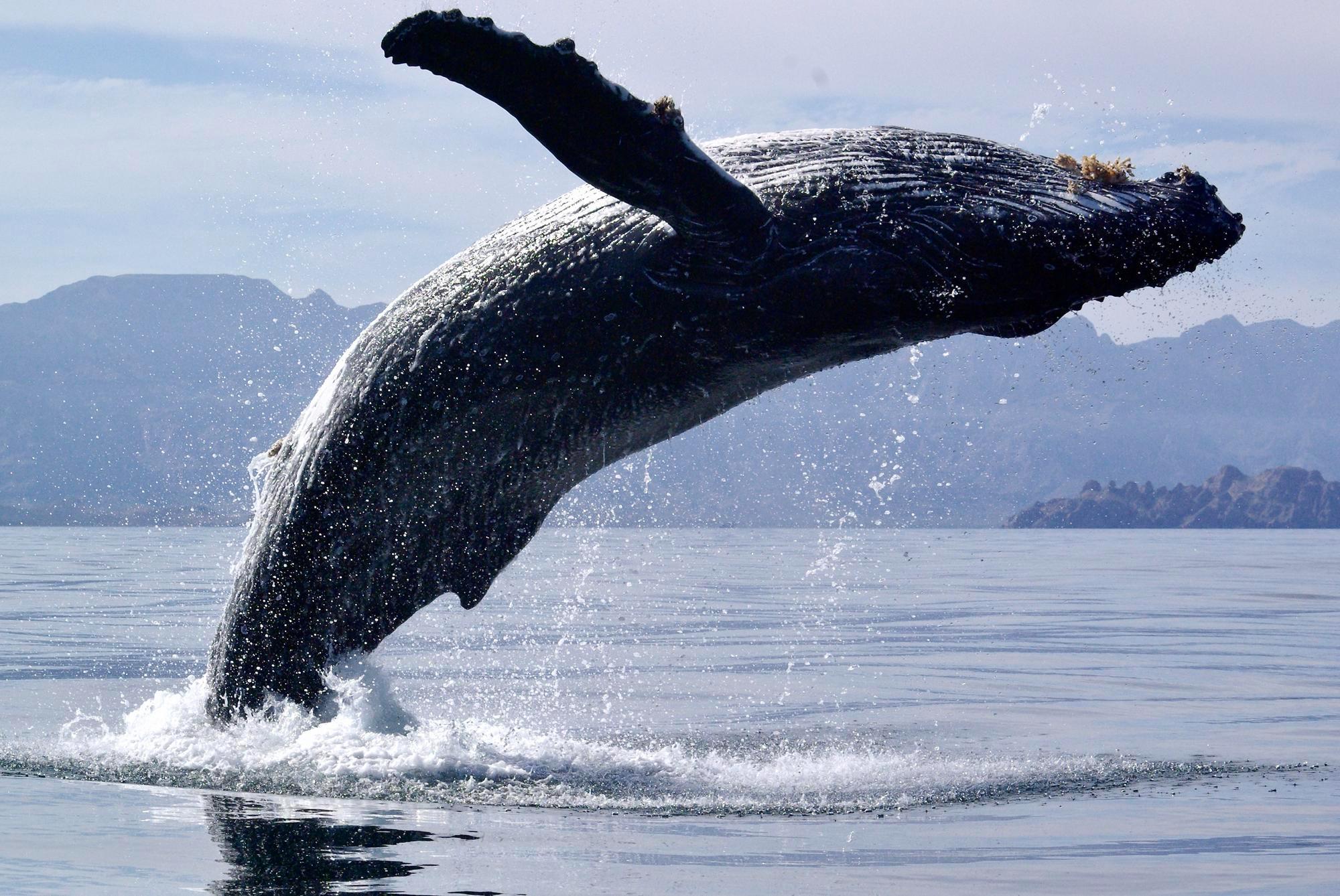
Southern right whales breach metres from shore, the cliff path winds eleven kilometres.
Compare fares, pick the fit — all bookings are mobile-voucher and eligible for free cancellation where shown.
7 hr
24 hr
Choosing a cape town to hermanus whale watching tour involves balancing the proximity of boat-based excursions with the flexibility of coastal cliff-path viewing. Visitors can select between private boat tours for intimate marine encounters or public land-based observation areas for a spontaneous, cost-free experience.
| Land-Based Viewing Public Access |
Top pick Boat-Based Tours Private Commercial Operators |
|
|---|---|---|
| Entrance fee | 0 ZAR | Varies by operator |
| Access method | Cliff path walks | Boat departure |
| Flexibility | Self-guided anytime | Timed departures |
| Best for | Panoramic views | Close-up encounters |
| See tickets & prices |
Verdict: For the most comprehensive experience, we recommend booking cape town to hermanus whale watching tour tickets in advance for a boat-based excursion, while keeping the cliff path available for flexible land-based viewing.
Worth it during whale season for nature enthusiasts
A cape town to hermanus whale watching tour delivers solid value between June and November when southern right whales migrate to Walker Bay for calving. The 90-minute coastal drive through the Overberg region passes wine estates and mountain passes, and Hermanus itself holds the title of world's best land-based whale watching destination. Tours typically include 2–3 hours in town—enough time for cliff-path sightings where whales breach within 50 meters of shore, plus a stop at the Old Harbour Museum. The dedicated whale crier patrols the coast blowing a kelp horn to signal sightings. Combo options add Betty's Bay penguin colony or Cape Agulhas lighthouse visits without much extra cost. Outside whale season (December–May), the tours pivot to scenic coastal drives and local wine tastings, which dilutes the core value proposition unless you're equally interested in Overberg landscapes.
Bottom line: Book a cape town to hermanus whale watching tour between July and October when calving activity peaks and sighting probability justifies the day-trip investment.
They complement each other; most visitors who do both call the dedicated Hermanus coastal experience the more immersive wildlife outing.
|
Top pick Hermanus Day Tour |
Cape Town Local Boat Tours | |
|---|---|---|
| Transit time | 2 hours each way | 0.5–1 hour round trip |
| Primary sighting method | Shore-based and boat | Boat-based only |
| Best for | Whale capital scenery | Time-pressed visitors |
| Whale density | Highest (Walker Bay) | Moderate (False Bay/Atlantic) |
| Typical duration | Full day (8–10 hours) | 2–3 hours |
| Booking constraint | Pre-book recommended | Advance booking essential |
| Cost (approx) | 1500–2500 ZAR | 1200–1800 ZAR |
| See tickets & prices |
Verdict: Choose the cape town to hermanus whale watching tour for the unique combination of cliff-side viewing and boat proximity, or opt for a local boat tour if you want to minimize travel time.
Hand-picked experiences loved by thousands of travelers
10 hours
Free Cancellation
Spot Southern Right whales from clifftop paths and visit African penguin colonies on this coastal adventure
10 hours
Free Cancellation
Journey to Africa's southernmost point, watch whales breach, meet adorable penguins, and taste wine
8 hours
Free Cancellation
Spot Southern Right Whales from a specialist boat, then sample wines at a coastal estate
1 day
Free Cancellation
Exclusive full-day coastal adventure for up to 7 guests with heritage tea tasting and shoreline whale viewing
10 hours
Free Cancellation
Discover Southern Right Whales and endangered penguins on this exclusive coastal adventure from Cape Town
You leave Cape Town as the N2 curves past False Bay, the two-hour drive delivering you to Hermanus's Old Station Building by mid-morning.
The information centre maps the cliff path's twelve kilometres in both directions; most visitors turn left toward Gearing's Point, where the granite ledge drops six metres to the waterline and mothers park their calves in the kelp beds below. You hear the blowhole exhalation before you see the whale—a wet rush of air, then the barnacled head surfaces ten metres offshore.
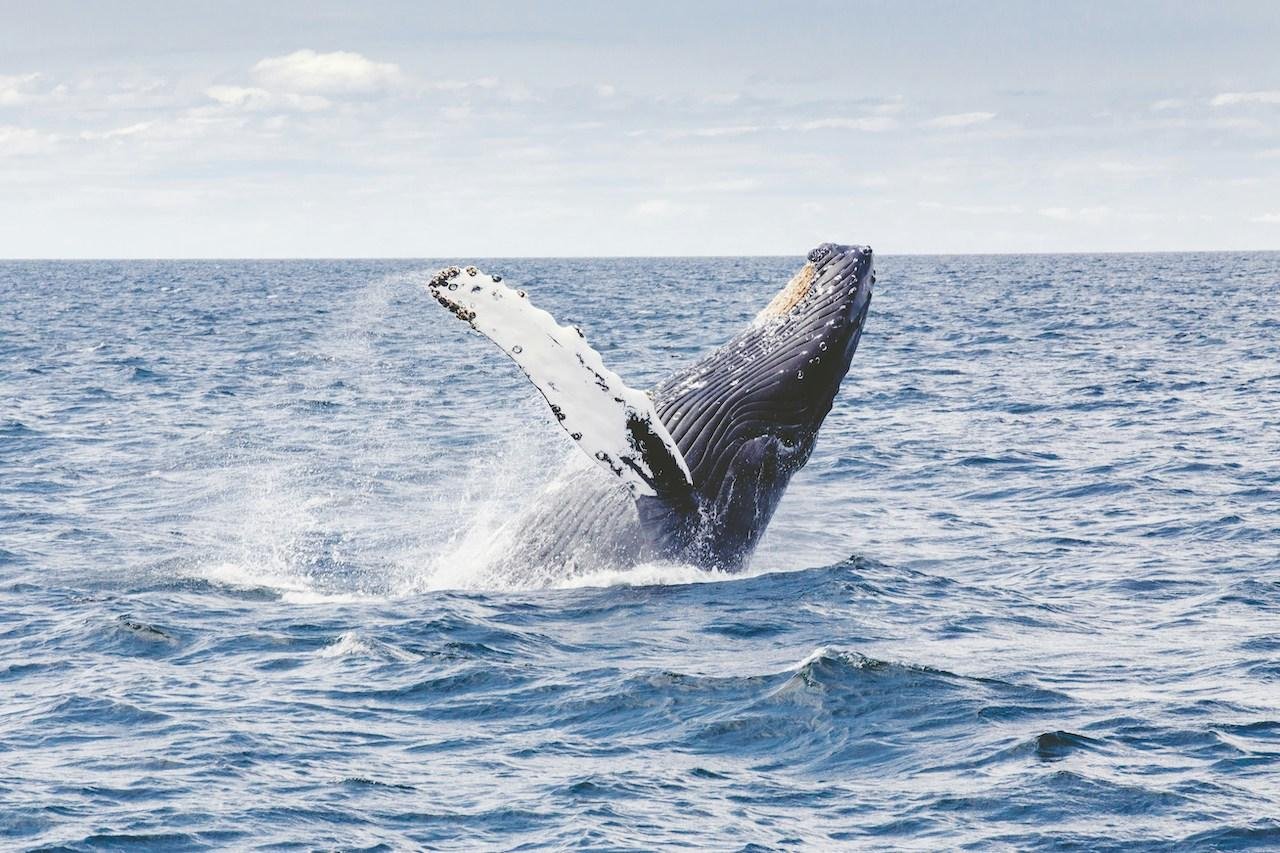
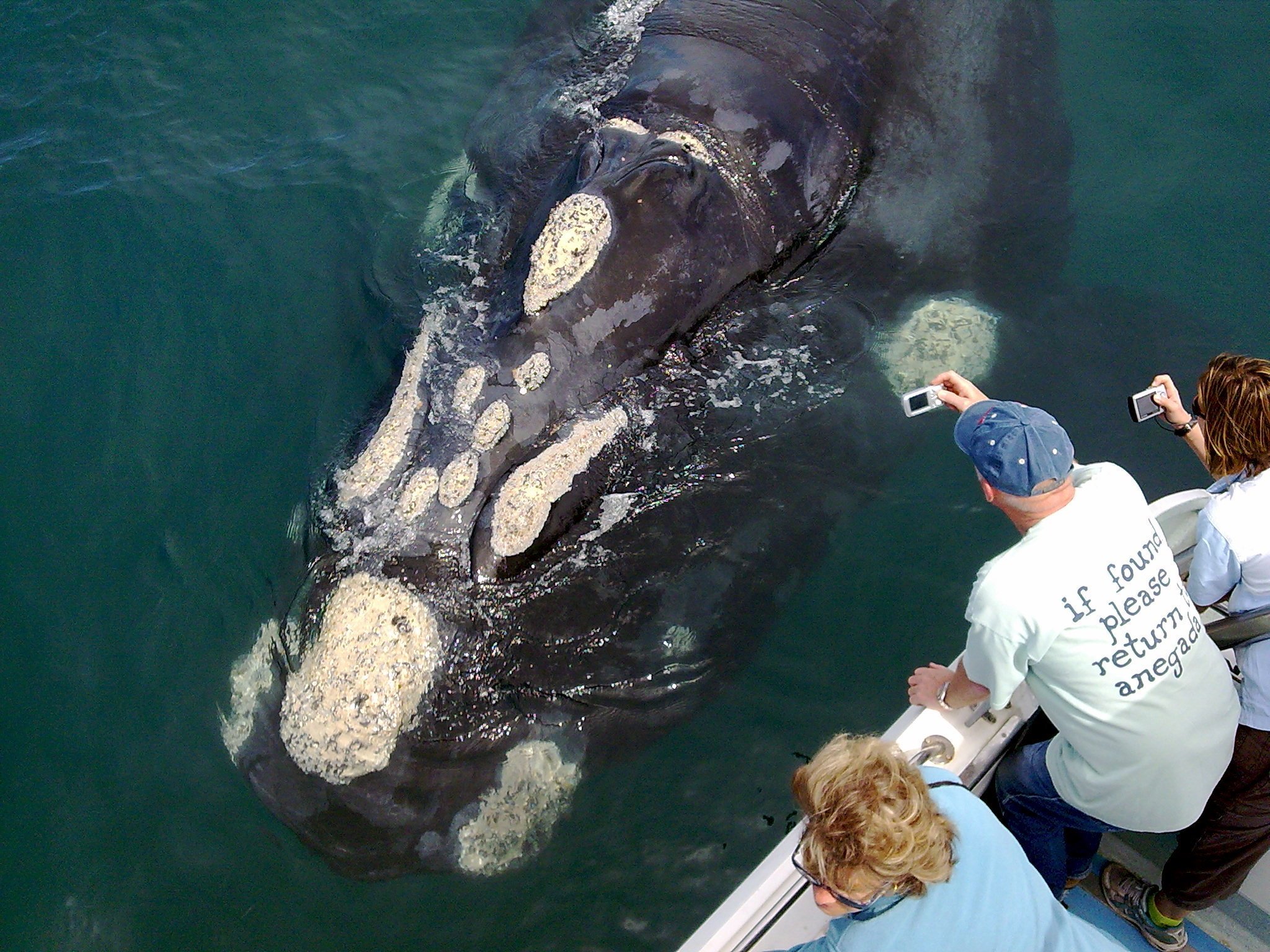
If you've booked a boat-based tour, you walk to New Harbour by 10:30, where rigid inflatables shuttle passengers beyond the 300-metre boundary. The skipper cuts the engine and drifts; a fourteen-metre female rolls onto her side, white belly exposed, one flipper raised vertical. Calves breach repeatedly, their five-tonne bodies clearing the water in clumsy arcs. The tour lasts ninety minutes before returning you to the harbour, where the cliff path continues east past stone tidal pools toward Grotto Beach. You finish at the Old Harbour Museum, where century-old whaling harpoons contrast sharply with the living leviathans you've just witnessed offshore.
All the details about your upcoming adventure in one place
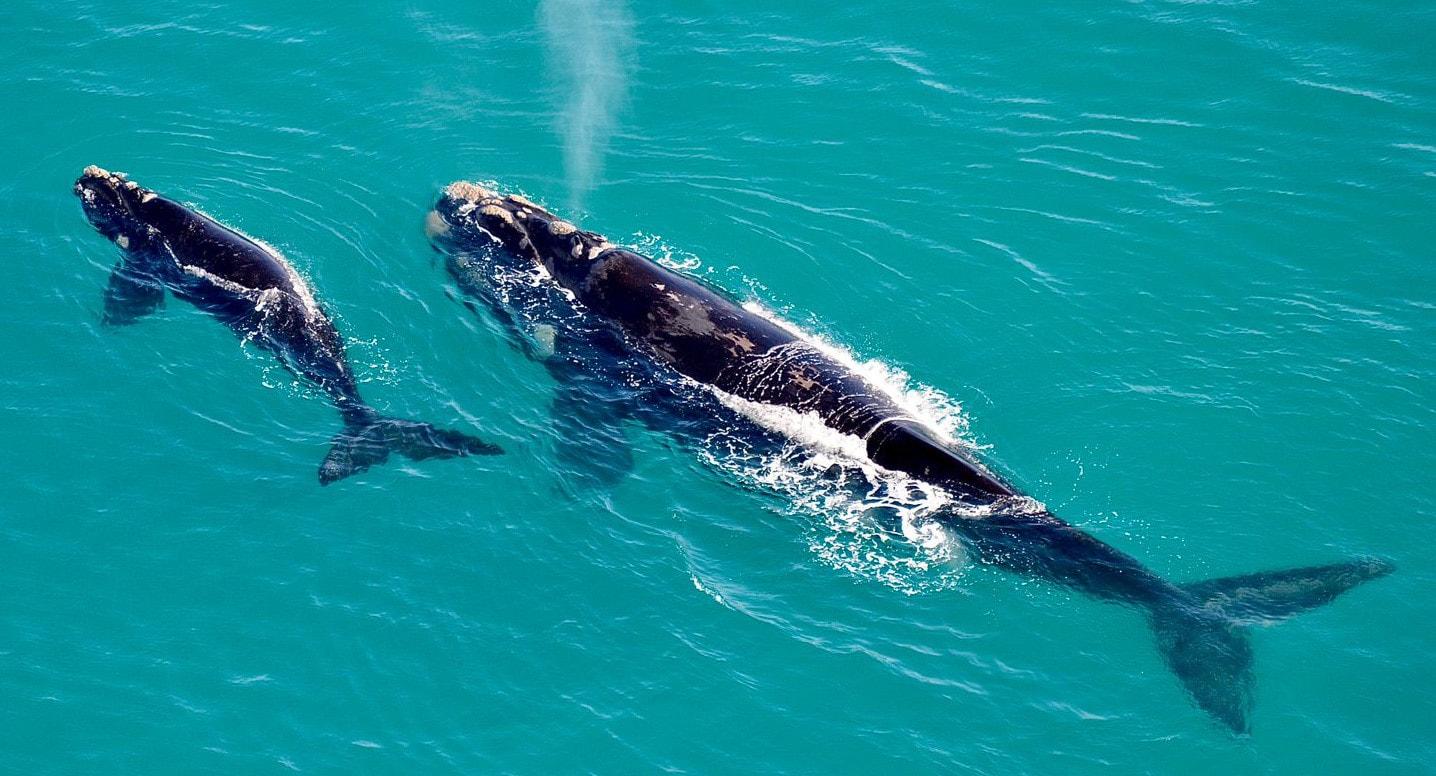
Walker Bay holds the densest congregation of southern right whales in the Southern Hemisphere between June and December, when females calve in the sheltered waters two hundred metres from Hermanus's rocky coastline.
The town's cliff-path infrastructure and shallow breeding bays create the only land-based whale watching venue in the world where visitors observe breaching, tail-slapping, and nursing behaviour without boarding a vessel. UNESCO recognised the site's marine significance in 2003, and the annual whale census recorded 198 individual southern rights in the 2025 season alone.
The 120-kilometre route from Cape Town traces the R44 coastal road through Gordon's Bay and Betty's Bay, where the Kogelberg Biosphere's fynbos slopes meet the Atlantic. Most Cape Town to Hermanus whale watching tours depart the city by 08:00 to reach Walker Bay during the whales' morning feeding activity, when calves surface every three to five minutes. The Old Harbour precinct serves as the terrestrial viewing hub, its Victorian-era stone jetty extending into the bay where mothers position their young in water shallow enough for tourists to hear exhalations through blowholes. Hermanus employs the world's only whale crier, a tradition since 1992, who signals sightings with a kelp horn from vantage points along the twelve-kilometre cliff path that ribbons from New Harbour to Grotto Beach.
Commercial boat-based whale watching operates under strict National Environmental Management regulations: vessels maintain a 300-metre exclusion zone and limit engine time to 20 minutes per encounter. Operators launch from New Harbour between 09:00 and 15:00, weather permitting, with sea conditions calmest before 11:00. The marine sanctuary extends seven kilometres offshore and prohibits jet skis, creating an acoustic environment where whale vocalisations carry underwater for thirty kilometres. Southern right whales, named for being the 'right' whale to hunt due to their buoyant carcasses, were reduced to fewer than 300 individuals globally by 1935; the Walker Bay population now numbers approximately 6,000 and increases at 7% annually, making Hermanus the most reliable shore-based viewing location on the African continent.
Walker Bay holds the densest congregation of southern right whales in the Southern Hemisphere between June and December.
Dress in layers to adapt to the unpredictable coastal weather and the ocean breeze. Sturdy, comfortable shoes are recommended for walking along the Hermanus Cliff Path.
Keep personal belongings minimal to maximize space on boat decks. Store valuables securely at your accommodation before heading out on a cape town to hermanus whale watching tour.
Bring a camera with a zoom lens to capture marine life from a respectful, ethical distance. Ensure your battery is fully charged for a full-day excursion.
The area is family-friendly, but boat tours may have age restrictions for safety. Consult with your guide before booking a cape town to hermanus whale watching tour for younger children.
Hermanus offers accessible infrastructure, though boat-based tours require the ability to board a vessel. Check with your operator regarding specific mobility needs for your cape town to hermanus whale watching tour.
Numerous cafes and restaurants are available near the Old Station Building and along the waterfront. Please dispose of all waste responsibly to protect the marine environment.
Opening Hours
08:30–17:00 (Mon–Fri), 08:00–13:00 (Sat)
Address
Old Station Building, c/o Mitchell and Lord Roberts Streets, Hermanus, 7200, South Africa
Wheelchair Access
Available at key sites including the Municipal Library and Village Craft Market
Best Arrival
08:30–16:00 for calm seas and optimal photography lighting
Storage
Not available at the Tourism Bureau; use secure hotel facilities
Navigation
Located near the Checkers Mall in the central business district
Flexible cancellation is available for most bookings up to 24 hours in advance. Please verify specific terms with your selected boat operator, as tour entrance and conservation fees may vary.
Recommended time
7-10 hours
A typical cape town to hermanus whale watching tour requires a full day to accommodate the two-hour transit each way. Most visitors spend several hours exploring the coastal paths for land-based marine mammal sightings before departing. When looking for cape town to hermanus whale watching tour tours, ensure you allocate extra time for potential boat delays due to ocean conditions. Securing cape town to hermanus whale watching tour tickets in advance helps manage expectations as crowd levels peak during the midday period.
Crowd levels through the day
The cape town to hermanus whale watching tour emerged from centuries of maritime observation along the Walker Bay coastline. San hunter-gatherers recorded whale sightings in rock art near present-day Hermanus as early as 2,000 years ago, recognizing the annual southern right whale migration from Antarctic feeding grounds. European settlers in the 1850s established Hermanuspietersfontein—later shortened to Hermanus—as a fishing village where whalers pursued the same cetaceans for oil and baleen. Commercial whaling operations at Walker Bay reached their peak between 1908 and 1916, processing dozens of carcasses each season until stocks collapsed. The 1935 International Whaling Convention failed to protect southern right whales adequately. By 1950, fewer than 300 individuals survived in South African waters. Local extinction seemed inevitable. South Africa's 1980 moratorium on whaling transformed Hermanus from hunter to guardian. The Old Harbour Museum opened in 1981, converting whaling infrastructure into educational exhibits. Researchers documented the first post-moratorium calving pairs returning to Walker Bay in 1983, their numbers increasing by seven percent annually throughout the 1990s. Hermanus appointed the world's first Whale Crier in 1992, a land-based alert system using a kelp horn to signal sightings to tourists. The role became UNESCO Intangible Cultural Heritage nominated by 2021. Boat-based whale watching tour operators formalized safety protocols with Marine and Coastal Management by 1998, maintaining minimum approach distances of 300 meters. The cape town to hermanus whale watching tour tickets became Southern Africa's most accessible marine mammal experience, drawing 130,000 annual visitors by 2019. Current population estimates exceed 6,000 southern right whales in South African waters, with Walker Bay hosting peak concentrations between June and November each year.
San communities document whale migrations in coastal rock art near Walker Bay
Hermanuspietersfontein develops as whaling station, processing southern right whales for oil
Commercial whaling operations peak with industrial processing facilities at Old Harbour
South Africa implements whaling moratorium, ending 130 years of commercial hunting
Hermanus appoints world's first Whale Crier to alert tourists to whale sightings
Marine operators establish regulated boat-based viewing protocols with 300-meter approach limits
Annual visitor numbers reach 130,000 for whale season tours from Cape Town
Southern right whale population exceeds 6,000 in South African waters
Stand on the rocky outcrop for an expansive view of Walker Bay where southern right whales often breach near the shoreline. This spot offers a clear vantage point for your cape town to hermanus whale watching tour photography.
Follow this coastal trail to find various elevated wooden platforms that provide stable positions for telephoto lenses. You can capture marine life behavior against the backdrop of the rugged coastline.
This working harbor serves as the primary departure point for boat-based excursions and offers shots of vessels heading out to sea. It is a functional location to capture the departure of a Hermanus whale watching tour.
Located along the cliff path this area provides a slightly lower angle to the water for intimate shots of whale tails and flukes. It is a popular stop for those seeking cape town to hermanus whale watching tour tours images.
Planning a cape town to hermanus whale watching tour requires careful consideration of the long drive and marine conditions to ensure a smooth experience. Families can balance land-based observation with boat-based excursions to accommodate younger children and varying attention spans.
The drive from the city typically takes two hours, so factor in extra stops for younger passengers when booking your cape town to hermanus whale watching tour tours. Keep travel times in mind to maintain a comfortable pace for the whole family.;Sea Sickness
Visitors planning a cape town to hermanus whale watching tour will find a variety of dining options concentrated in the town center, just a short walk from the coast. Whether you need a quick coffee before your maritime excursion or a relaxed meal after returning from the southern right whale habitats, the local eateries offer convenient access.
Located in a historic building, this spot is ideal for fresh seafood after your cape town to hermanus whale watching tour tours. Booking is advised due to its popularity with coastal visitors.;Burgundy Restaurant
Everything you need to know for your journey
The Hermanus Tourism Bureau at the Old Station Building is open Mon–Fri 08:30–17:00 and Sat 08:00–13:00.
Yes, land-based whale watching is free; boat tours are private commercial services with their own pricing.
We recommend arriving between 08:30–16:00 to enjoy the calmest sea conditions and best light for your cape town to hermanus whale watching tour.
Many operators welcome children, but you should confirm age requirements directly with your chosen provider.
You can drive or take a tour transfer from Cape Town, which takes approximately 90 minutes.
Bring sunscreen, a windbreaker, binoculars, and your camera for the best experience on your cape town to hermanus whale watching tour.
You can easily combine your visit with the Old Harbour Museum or the Cliff Path, both located nearby.
Flexible cancellation for a cape town to hermanus whale watching tour is typically available up to 24 hours in advance.
Yes, photography is highly encouraged, provided you respect the animals and maintain an ethical distance from the whales.
Join thousands of happy travelers who have discovered this incredible experience
Book Your Experience Now