


Quick answer
Whale watching near cape town centers on Hermanus, where southern right whales migrate annually from June to November, with peak activity between September and October. The Cliff Path remains open 24 hours with free access, though morning visits between 08:00 and 10:00 offer the calmest wind and clearest visibility before afternoon sea breezes obscure the surface. Land-based observation from the public walkway requires no booking or entrance fee.
Southern right whales travel over 5,000 kilometers from Antarctic feeding grounds to the sheltered bays of the Western Cape each austral winter. Hermanus became the first town globally to appoint a whale crier in 1992—a position that still exists, with the crier blowing a kelp horn to announce sightings along the coast. The species earned its name from 19th-century whalers who considered it the "right" whale to hunt: slow-moving, buoyant after death, and rich in oil. Today those same characteristics make southern right whales ideal for shore observation. Cows with calves linger in Walker Bay's shallow water for weeks, teaching newborns to breach and lobtail within sight of the cliff edge. The Cliff Path stretches from the New Harbour to Grotto Beach, with dedicated viewing platforms at Gearing's Point and the Old Harbour. Binoculars help but are not essential—whales often surface 20 meters from the rocks. Whale watching near cape town follows a predictable calendar. Early arrivals appear in June as water temperatures drop below 18°C. Numbers build through August, plateau in September and October when breeding activity peaks, then taper through November as pods begin the return migration south. December sightings occur but become sporadic. The morning advantage stems from wind patterns: southeasterly gusts intensify after midday, roughening the bay and making whale blows harder to spot against whitecaps. Flat morning water reveals every dorsal ridge and fluke slap. Hermanus maintains its status through a combination of bathymetry and behavior. Walker Bay's gradual shelf provides the calm nursery habitat southern right whales require, while the town's compact geography concentrates multiple observation points within walking distance. No other mainland site in South Africa offers comparable density of sightings from shore.
“Southern right whales surface within 20 meters of the Hermanus cliff edge during the September and October calving peak.”
The Best Time for Whale Watching Near Cape Town
The primary whale watching season in Hermanus runs from June to December, with peak activity occurring between August and October. For the best conditions, plan your visit during the 08:00–10:00 arrival window to benefit from optimal visibility and calmer wind conditions before the afternoon sea breeze sets in.
June to July
Moderate crowdsCool, 15°C to 18°C
Early season sightings as southern right whales begin arriving.
August to October
Peak crowdsMild, 16°C to 20°C
This is the peak migration period with the highest frequency of sightings.
November to December
Moderate to low crowdsWarm, 18°C to 23°C
Whale activity begins to taper off as pods return to colder waters.
Weekday mornings
Low to moderate—
Provides the most favorable atmospheric conditions for spotting whales from the cliff path.
Verdict: The best time to visit is during a weekday morning in September or October to enjoy the highest whale activity alongside optimal light and wind conditions.
Opening Hours for Whale Watching Near Cape Town
The public cliff path in Hermanus is accessible for land-based whale watching at any time of the day or night.
| Monday | 00:00–23:59 | |
|---|---|---|
| Tuesday | 00:00–23:59 | |
| Wednesday | 00:00–23:59 | |
| Thursday | 00:00–23:59 | |
| Friday | 00:00–23:59 | |
| Saturday | 00:00–23:59 | |
| Sunday | 00:00–23:59 |
How to Get to Whale Watching Near Cape Town
The Cliff Path is located in Hermanus, approximately 120 kilometers southeast of Cape Town. The most direct approach is by car via the R44 coastal route or the N2 highway.
N2 highway and R43 road
Intercity coach to Hermanus station
Private transfer via N2
Best Photo Spots for Whale Watching Near Cape Town
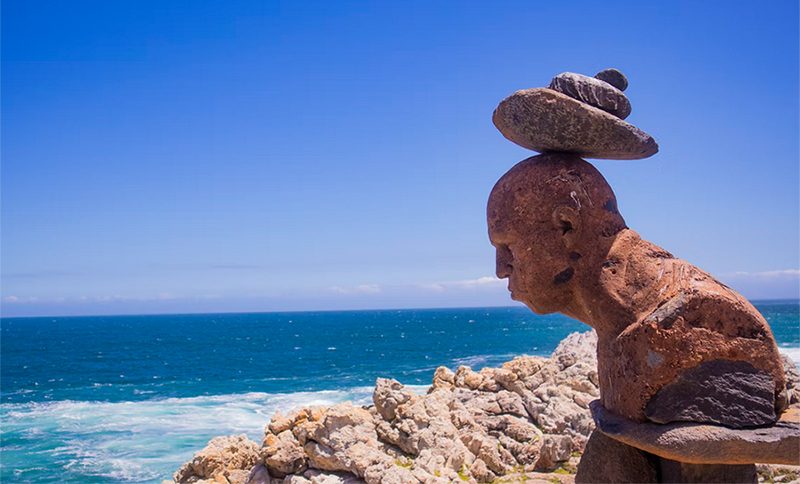
Gearing’s Point
Elevated coastal vantage point offering panoramic ocean views and metal sculpture installations for foreground framing.
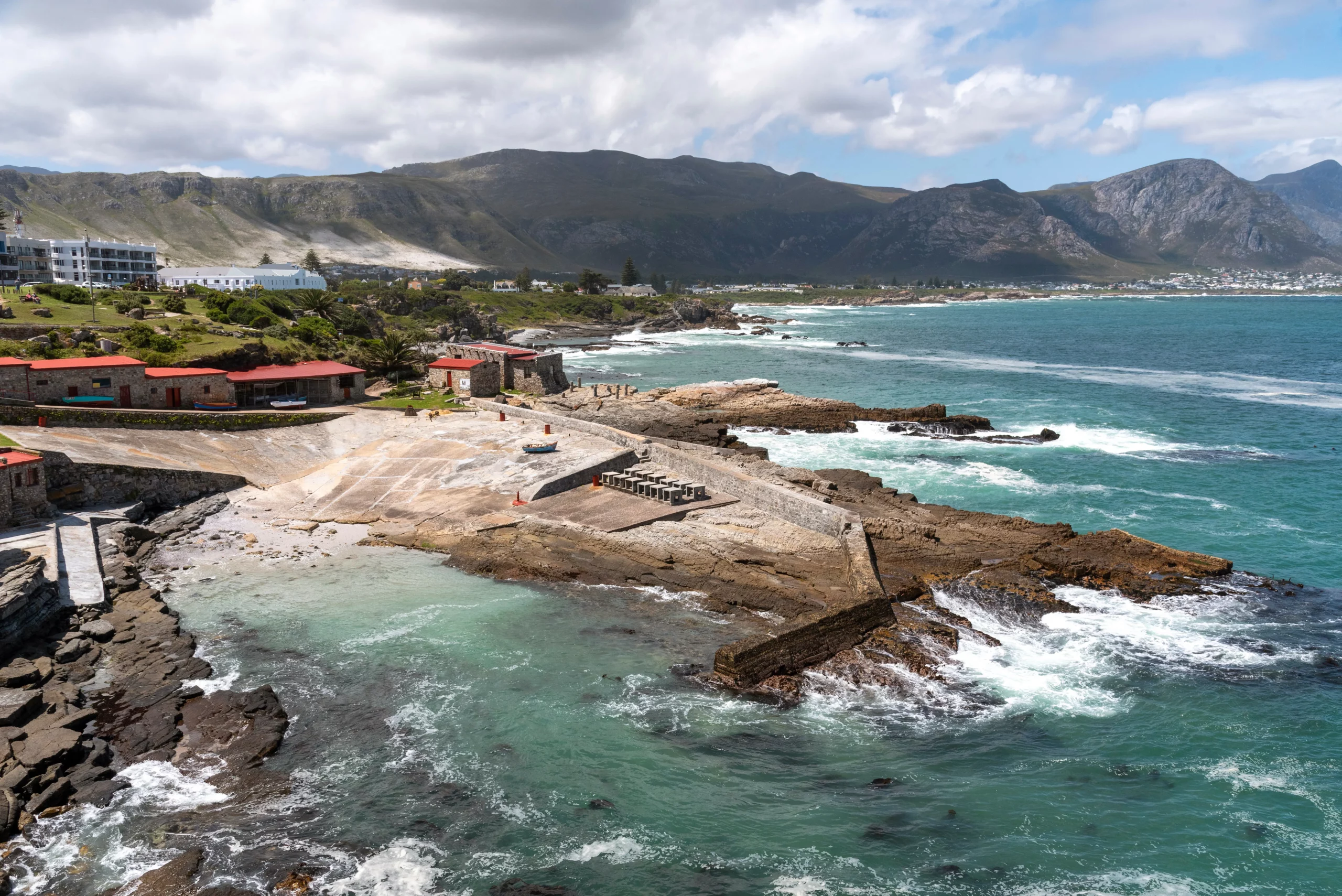
Old Harbour
Historical stone structures provide a rustic frame for capturing whales entering the bay.

Sievers Point
A popular road-side lookout with direct sightlines over the central bay area.

Kwaaiwater
Positioned on a rocky headland, this spot allows for capturing breaking waves and whale breaches.
Rules for Whale Watching Near Cape Town
Hermanus's cliff path whale watching depends on visitor conduct that prioritizes whale welfare and the coastal environment. Responsible observation protects the Southern Right whales that migrate here annually.
Do
- Keep noise levels low to avoid disturbing whales and other visitors
- Stay on designated cliff paths to protect coastal vegetation
- Dispose of all litter properly or pack it out
- Respect marine mammal distance guidelines when viewing from shore
- Allow others space to view without obstruction
Don't
- Don't attempt to feed or attract whales with noise or objects
- Don't climb over safety barriers or venture onto unstable cliff edges
- Don't leave food waste that attracts baboons and other wildlife
- Don't use drones without proper permits near marine mammals
- Don't touch or remove any coastal plants or marine life
Check availability
Frequently Asked Questions About Whale Watching Near Cape Town
Everything you need to know about whale watching near cape town